Migratory birds are returning to Humboldt Bay for the winter, and we're holding our first public birdwatching tour in several years this Saturday! We'll meet on the Eureka Waterfront during a high tide for the best viewing. All ages and abilities are welcome.Space is limited - please RSVP at this link and we'll let you know where to meet.
The new Humboldt Bay Trail audio tour features interviews with local experts covering 40 points of interest between the Arcata Marsh Interpretive Center and the south end of the Hikshari' Trail in Eureka.The tour covers 12 miles of trail and features the bay, its history, flora and fauna, climate impacts, and projects to adapt to climate change, clean up Brownfields, and restore former marshes and wildlife habitat.
Read more …
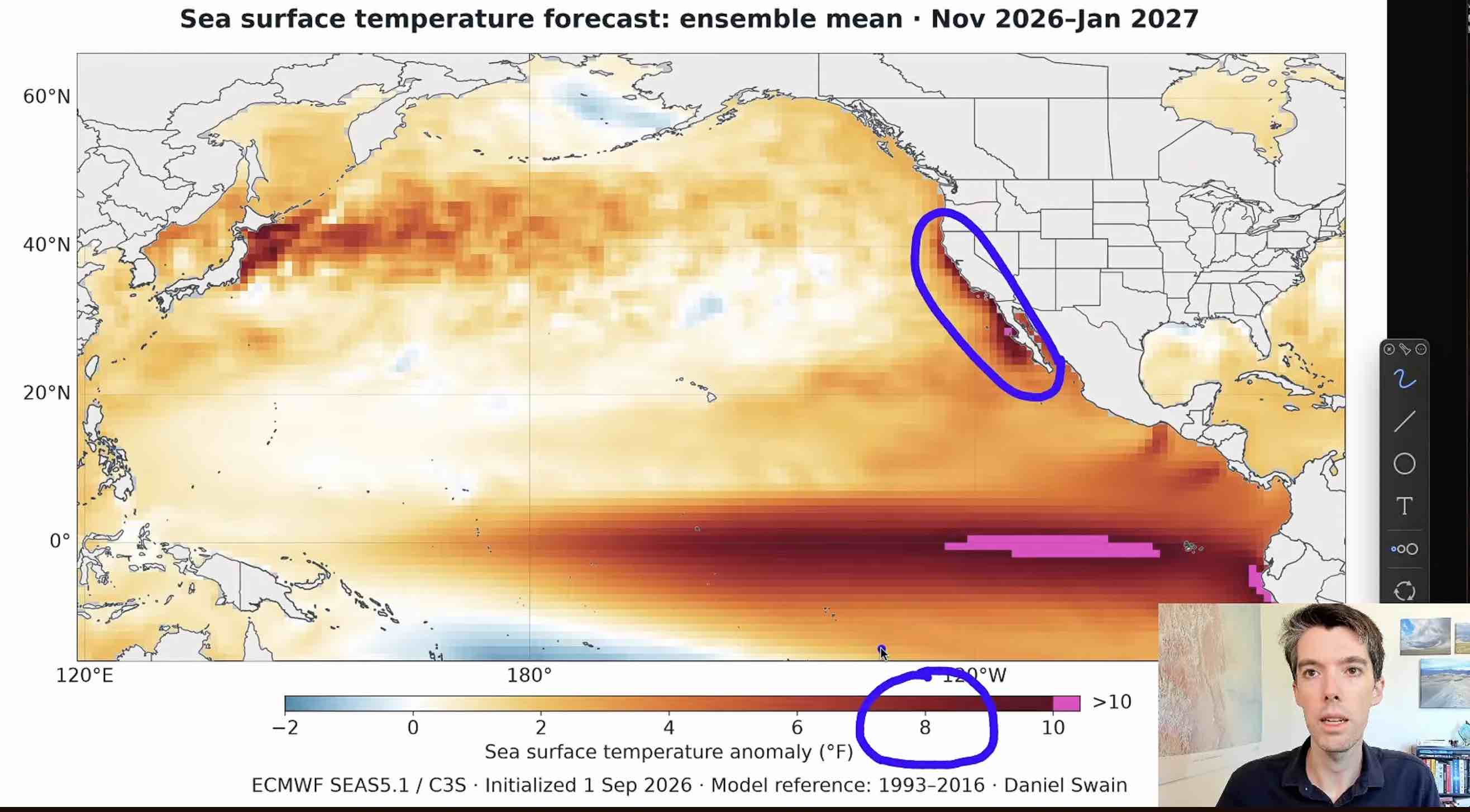
A strong Super El Niño has developed in the tropical Pacific that is expected to intensify and become a historic event by late 2026. We can expect this winter to bring heavy rainfall, a marine heatwave, and the highest sea levels California has ever seen.On Sept. 30, Blue Lake Rancheria will hold a Flood Fight Training Workshop. You can register online for the workshop or call (707) 668-5101 for more info. You can also sign up for Humboldt ALERT to receive official flood warnings and evacuation information.
Read more …
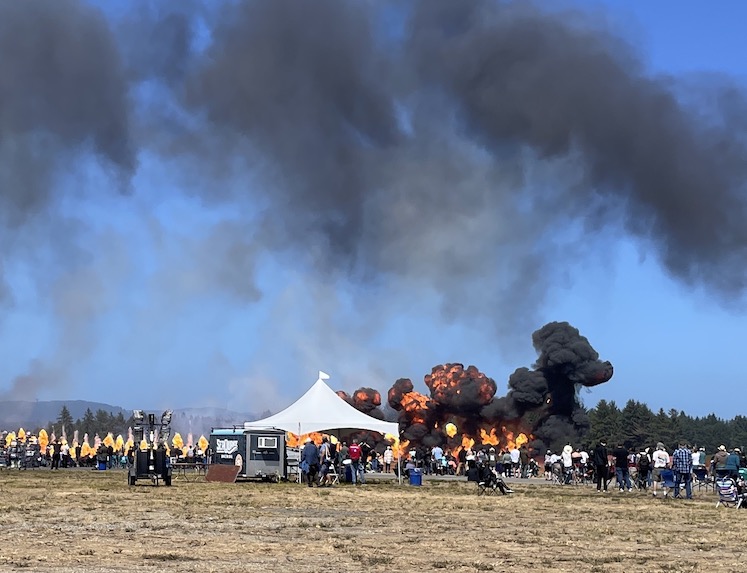
On August 8-9, the California Redwood Coast - Humboldt County Airport in McKinleyville (ACV) hosted the third annual Rumble Over the Redwoods featuring aerial performances and vintage planes to honor service members and inspire future aviators. While the air show brings aviation enthusiasts and community members together, one part of the event is raising serious concerns about its impacts beyond the airport: the use of explosives and their effects on nearby harbor seals.
Read more …
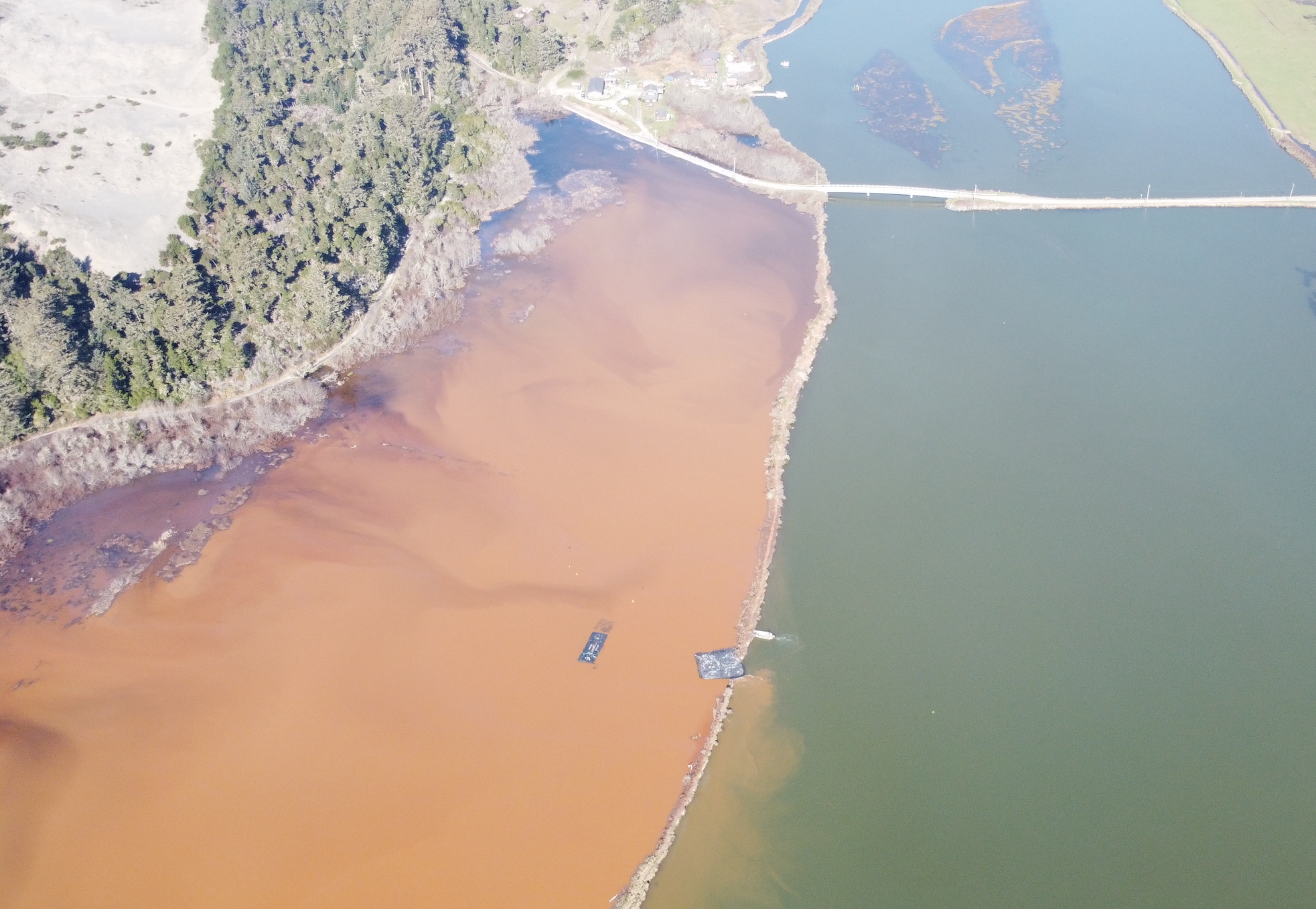
Starting in 1890, 40% Wigi (Humboldt Bay) was diked to convert public trust tidelands to private agricultural uses. Now 136 years later, sea level rise is enabling Wigi to begin reclaiming its stolen lands. In January, record King Tides breached a dike along Baduwa’t (Mad River) Slough. Photo by Todd Van Herpe, 2/2/26.
Read more …
In 2020, 6PPD-quinone, the breakdown product of the tire preservative 6PPD, was identified as a major contributor to Urban Runoff Mortality Syndrome in the Puget Sound watershed, where adult Coho Salmon often die before spawning in areas with high concentrations of road runoff. Since then, studies have been done in San Francisco Bay, but little information is available beyond major metropolitan areas. This study is the first to examine concentrations of 6PPD-q in Humboldt County. Left: Alex Juan sampling Jolly Giant Creek in Arcata for 6PPD-quinone. Photo by Audrey Jackson, Wiyot Tribe Shawir Darrudaluduk.
Read more …
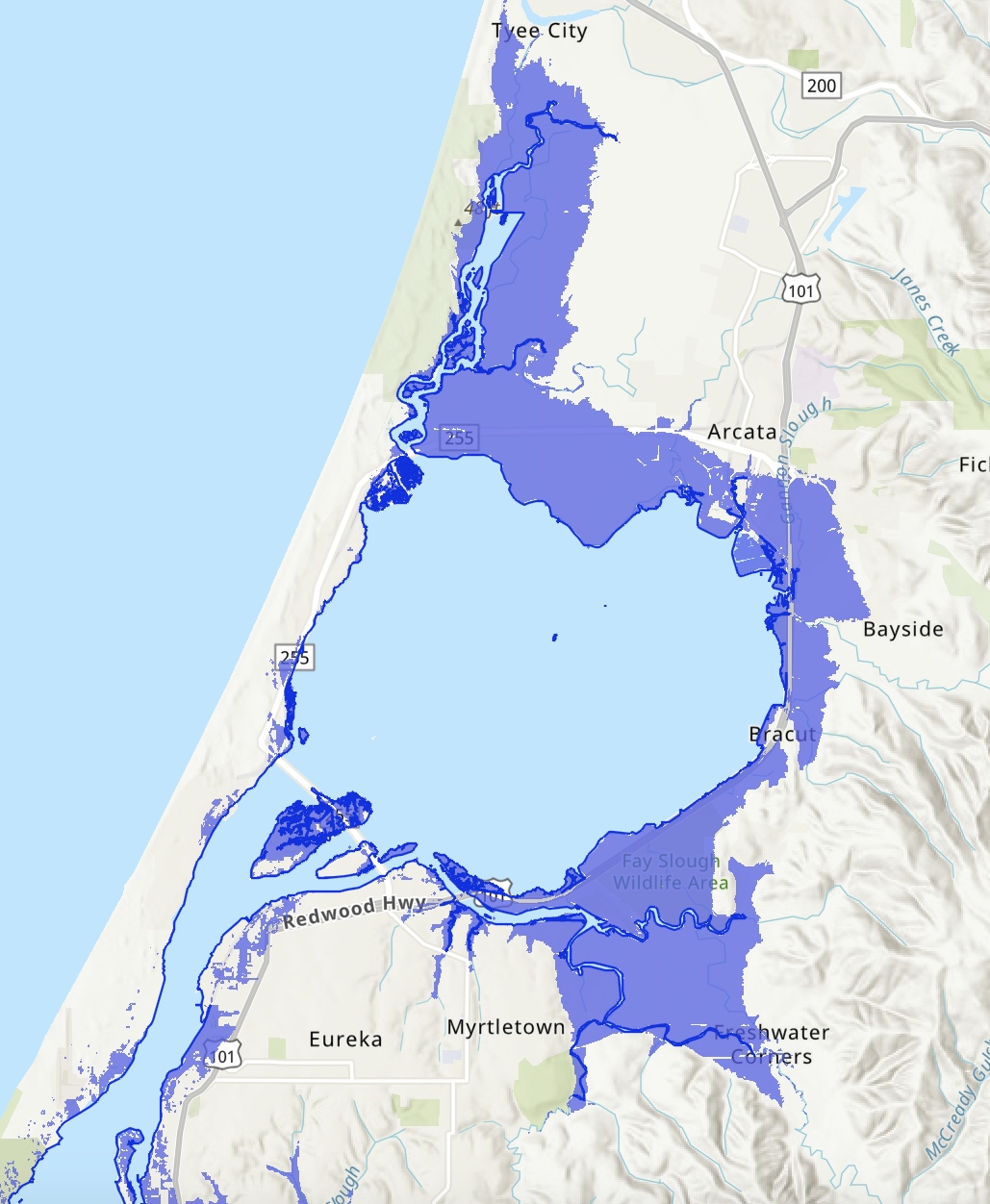
Has Saturday's highest King Tide on record gotten you wondering how our neighborhoods, roads, and open space will fare as sea level rises? Now you check out our interactive map of two sea level rise scenarios for the Humboldt Bay Area! Featured are scenarios showing 1- and 2-meters above Year 2000 water levels. For many years, these have been static maps with no simple way for the public to examine points of interest. Now, people wondering if their neighborhood is at risk can zoom in on locations and see street names, etc. King Tides are usually a time to consider how high a typical high tide will be with one foot of sea level rise, but this weekend's high tides were nearly three feet higher than the Mean Higher High Water at the North Spit. Note that this is the preliminary water level from the National Weather Service, which will verify that figure in a few weeks.
Read more …
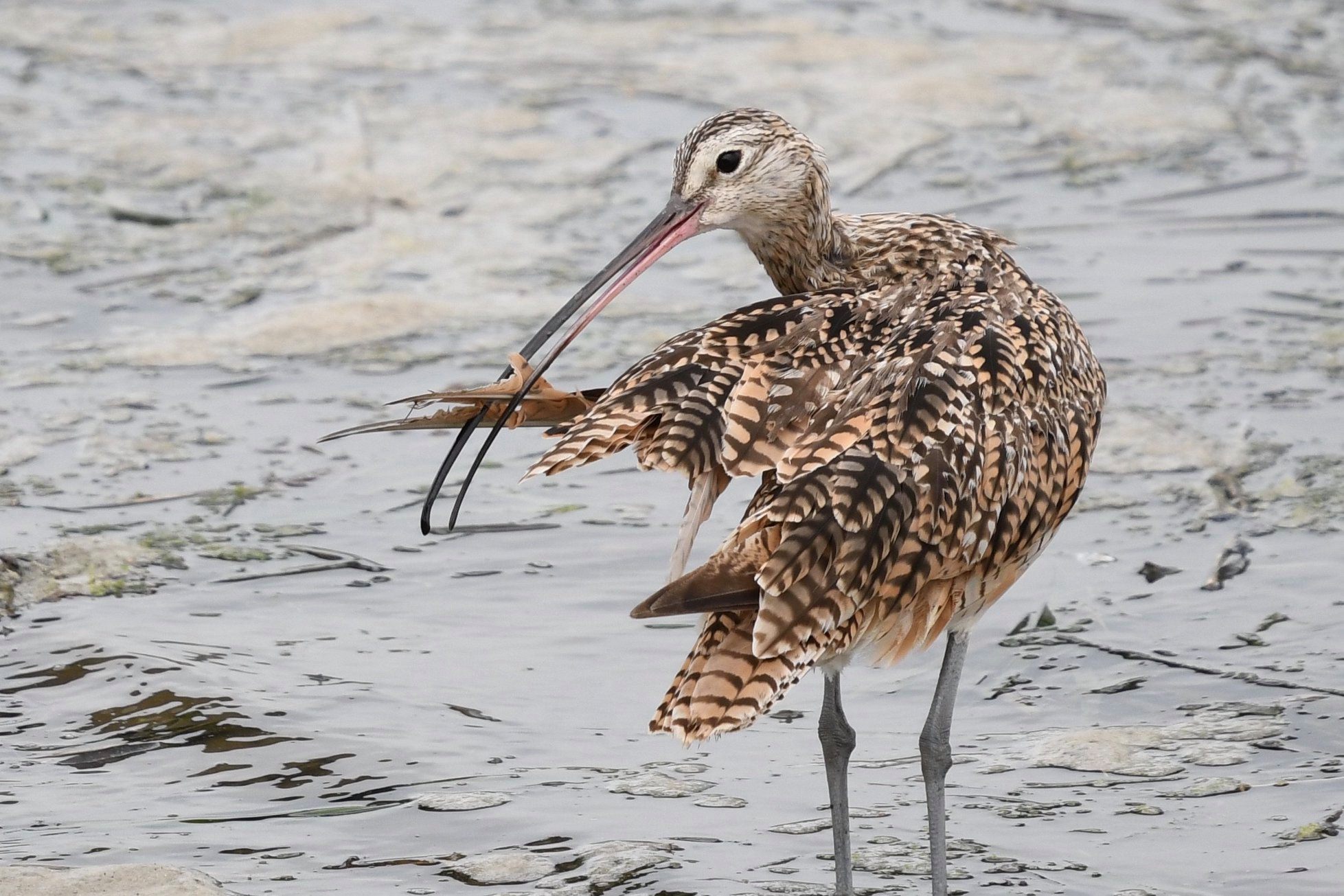 Migratory birds are returning to Humboldt Bay for the winter, and we're holding our first public birdwatching tour in several years this Saturday! We'll meet on the Eureka Waterfront during a high tide for the best viewing. All ages and abilities are welcome.Space is limited - please RSVP at this link and we'll let you know where to meet.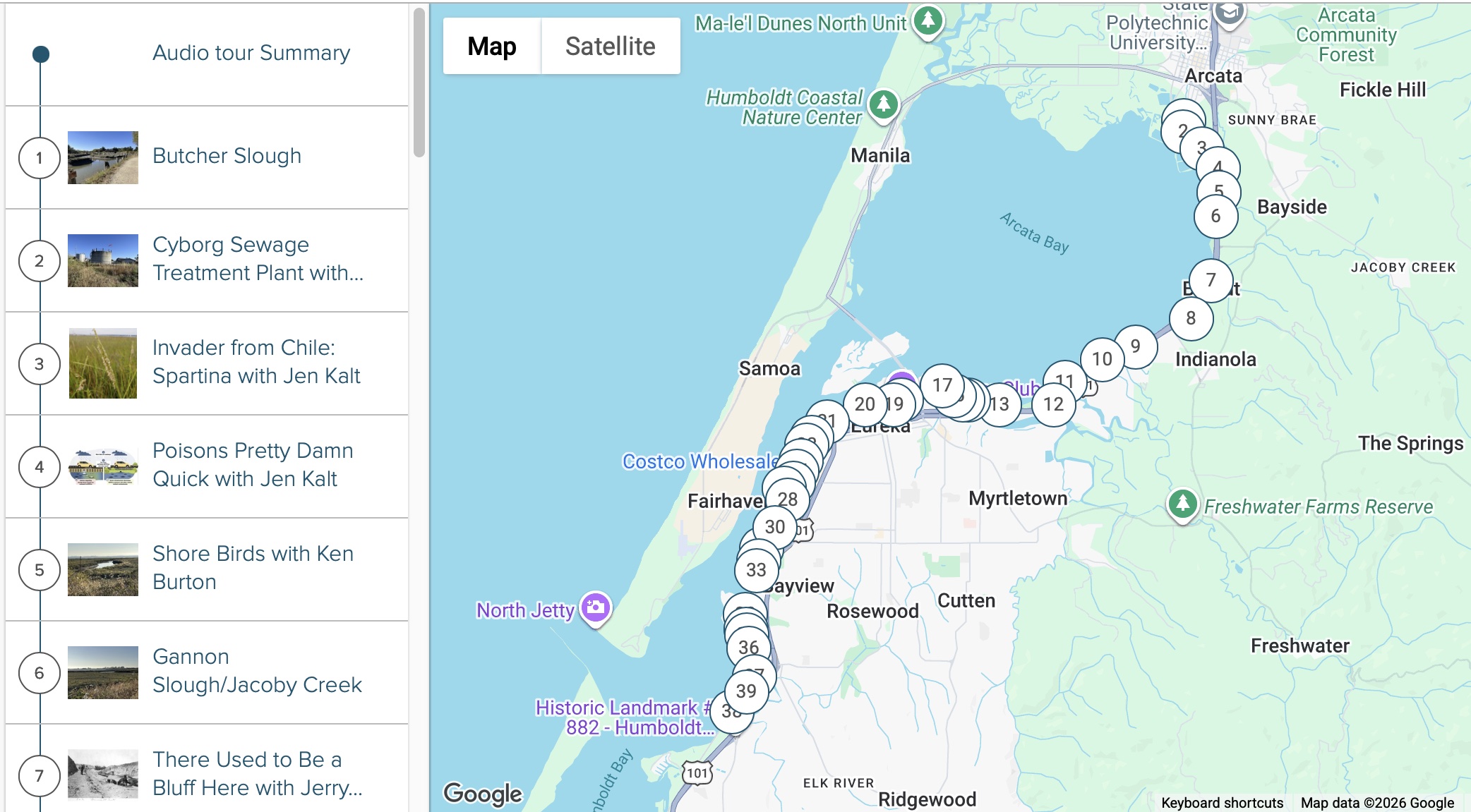
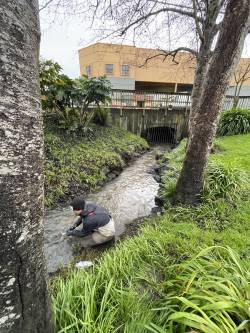 In 2020, 6PPD-quinone, the breakdown product of the tire preservative 6PPD, was identified as a major contributor to Urban Runoff Mortality Syndrome in the Puget Sound watershed, where adult Coho Salmon often die before spawning in areas with high concentrations of road runoff. Since then, studies have been done in San Francisco Bay, but little information is available beyond major metropolitan areas. This study is the first to examine concentrations of 6PPD-q in Humboldt County. Left: Alex Juan sampling Jolly Giant Creek in Arcata for 6PPD-quinone. Photo by Audrey Jackson, Wiyot Tribe Shawir Darrudaluduk.