On April 30, the Bureau of Ocean Energy Management (BOEM) released a “Request for Information” for new oil and gas lease sales in U.S. waters to inform the 11th National Outer Continental Shelf Oil and Gas Leasing Program. This announcement includes federal waters that were permanently withdrawn by the Biden Administration in January, including all Pacific and Atlantic Coasts, the eastern Gulf Coast, and parts of Alaska’s Bering Sea from offshore oil and gas development. The Trump Administration is considering reversing that decision, although it would require an act of Congress. Under the Outer Continental Shelf Lands Act of 1953, such withdrawals have been enacted by eight presidents, including five Republicans and three Democrats. In Trump’s first term, he withdrew the coasts of Florida, Georgia, South Carolina, North Carolina, and Virginia from new oil and gas leasing. An act of Congress is required to reverse presidential withdrawals.BOEM received more than 33,000 public comments on the 11th Leasing Program. Along with California, North Carolina, South Carolina, New York, and other coastal states submitted letters of opposition to offshore oil and gas activities along their coasts. Many cities and counties also oppose new offshore drilling, including Humboldt County, which passed a resolution opposing new offshore drilling in 2018.California’s long history of oil and gas opposition began after a major oil spill near Santa Barbara in 1969. In 1994, the California Coastal Sanctuary Act banned new oil and gas ventures in State waters (within three miles off the coast), reflecting the values of Californians who want to protect our coastal economy, coastal ecosystems, and coastal-dependent industries such as recreation, aquaculture, and fishing.Governor Newsom’s statement re-affirms the State’s long-held opposition to new oil and gas development, noting that in California, “bipartisan consensus against new oil drilling has been clear and consistent over five decades.” The California Natural Resources Agency also filed comments requesting removal of all three California Outer Continental Shelf planning areas from the 11th Leasing Program due to economic and environmental risks of new oil leases.Humboldt Waterkeeper and the Environmental Protection Information Center submitted comments opposing any and all new offshore oil and gas development along the Northern California coast, since these activities would interfere with long-standing uses of the ocean, including tribal, commercial, and recreational fishing. These areas include Essential Fish Habitat for federally protected species including salmon, whales and other marine mammals, and leatherback sea turtles. Oil and gas development would cause seismic testing noise, increased vessel traffic, and oil spills, resulting in whale-vessel strikes, degraded water quality, and threats to coastal recreation, tourism, fishing, and oyster farming - not to mention increasing the rate of climate change.Dozens of national, state, and local environmental groups submitted a joint letter noting that since the current federal Oil and Gas Leasing Program doesn’t expire until 2029, BOEM’s resources would be better spent elsewhere. In the Gulf of Mexico, 1,700 oil wells and 500 platforms are past due for decommissioning. One of those idle wells near Garden Bay Island, Louisiana had a blowout and spilled oil for a week in May, triggering an expensive federal emergency response and culminating in the controlled burn of a polluted marsh (along with its surviving wildlife) to remove the oil. Not only a colossal waste of taxpayer money, this incident resulted in a careless waste of marine life and polluting the air.With the U.S. setting an all-time record high of oil production in 2024, and three pending new lease sales in the Gulf of Mexico, it’s clear that there is no need for new offshore oil leases, despite recent Executive Orders declaring a “national energy emergency.” The oil and gas industry currently has more than 12 million acres of federal waters under lease, with less than 20% of these areas producing oil, plus 1,800 unused leases spanning 10 million acres of federal waters. In fact, oil and gas production in the U.S. outpaces consumption, with record amounts exported in 2023.Despite this supposed emergency, the Trump Administration temporarily paused offshore wind energy leases in January. And in July, the Republicans’ budget reconciliation bill ended tax credits for renewable energy projects, electric vehicles and appliances, and rooftop solar panels. Combined with an expansion of offshore oil and gas development, the U.S. is on track to exacerbate the effects of climate change, including catastrophic heat waves, wildfires, and floods, as well as longer-term changes like sea level rise and ocean acidification.Next steps will include a 60-day comment period on the draft proposed leasing program. We will keep you posted! To be added to our email list, contact us at This email address is being protected from spambots. You need JavaScript enabled to view it..
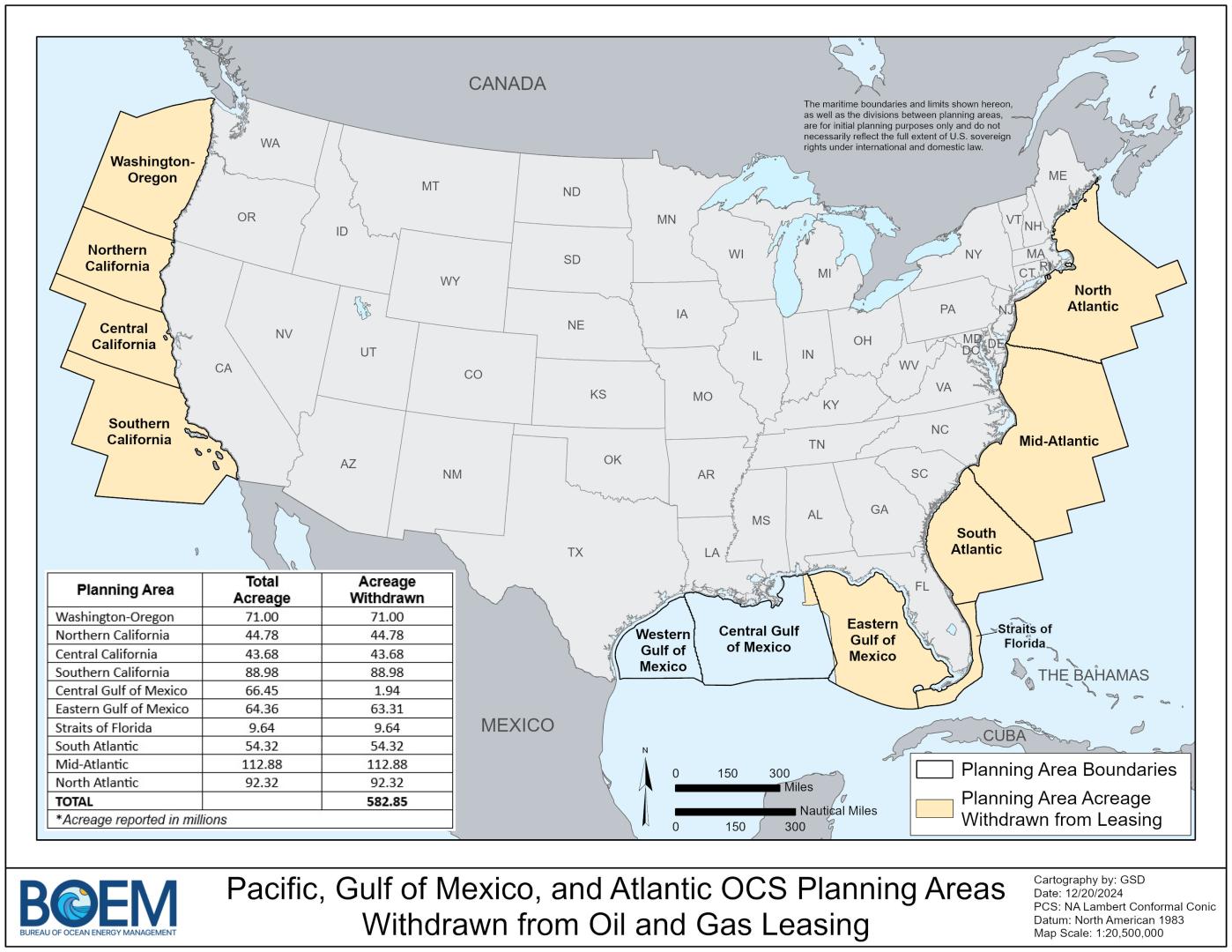 On April 30, the Bureau of Ocean Energy Management (BOEM) released a “Request for Information” for new oil and gas lease sales in U.S. waters to inform the 11th National Outer Continental Shelf Oil and Gas Leasing Program. This announcement includes federal waters that were permanently withdrawn by the Biden Administration in January, including all Pacific and Atlantic Coasts, the eastern Gulf Coast, and parts of Alaska’s Bering Sea from offshore oil and gas development. The Trump Administration is considering reversing that decision, although it would require an act of Congress. Under the Outer Continental Shelf Lands Act of 1953, such withdrawals have been enacted by eight presidents, including five Republicans and three Democrats. In Trump’s first term, he withdrew the coasts of Florida, Georgia, South Carolina, North Carolina, and Virginia from new oil and gas leasing. An act of Congress is required to reverse presidential withdrawals.BOEM received more than 33,000 public comments on the 11th Leasing Program. Along with California, North Carolina, South Carolina, New York, and other coastal states submitted letters of opposition to offshore oil and gas activities along their coasts. Many cities and counties also oppose new offshore drilling, including Humboldt County, which passed a resolution opposing new offshore drilling in 2018.California’s long history of oil and gas opposition began after a major oil spill near Santa Barbara in 1969. In 1994, the California Coastal Sanctuary Act banned new oil and gas ventures in State waters (within three miles off the coast), reflecting the values of Californians who want to protect our coastal economy, coastal ecosystems, and coastal-dependent industries such as recreation, aquaculture, and fishing.Governor Newsom’s statement re-affirms the State’s long-held opposition to new oil and gas development, noting that in California, “bipartisan consensus against new oil drilling has been clear and consistent over five decades.” The California Natural Resources Agency also filed comments requesting removal of all three California Outer Continental Shelf planning areas from the 11th Leasing Program due to economic and environmental risks of new oil leases.Humboldt Waterkeeper and the Environmental Protection Information Center submitted comments opposing any and all new offshore oil and gas development along the Northern California coast, since these activities would interfere with long-standing uses of the ocean, including tribal, commercial, and recreational fishing. These areas include Essential Fish Habitat for federally protected species including salmon, whales and other marine mammals, and leatherback sea turtles. Oil and gas development would cause seismic testing noise, increased vessel traffic, and oil spills, resulting in whale-vessel strikes, degraded water quality, and threats to coastal recreation, tourism, fishing, and oyster farming - not to mention increasing the rate of climate change.Dozens of national, state, and local environmental groups submitted a joint letter noting that since the current federal Oil and Gas Leasing Program doesn’t expire until 2029, BOEM’s resources would be better spent elsewhere. In the Gulf of Mexico, 1,700 oil wells and 500 platforms are past due for decommissioning. One of those idle wells near Garden Bay Island, Louisiana had a blowout and spilled oil for a week in May, triggering an expensive federal emergency response and culminating in the controlled burn of a polluted marsh (along with its surviving wildlife) to remove the oil. Not only a colossal waste of taxpayer money, this incident resulted in a careless waste of marine life and polluting the air.With the U.S. setting an all-time record high of oil production in 2024, and three pending new lease sales in the Gulf of Mexico, it’s clear that there is no need for new offshore oil leases, despite recent Executive Orders declaring a “national energy emergency.” The oil and gas industry currently has more than 12 million acres of federal waters under lease, with less than 20% of these areas producing oil, plus 1,800 unused leases spanning 10 million acres of federal waters. In fact, oil and gas production in the U.S. outpaces consumption, with record amounts exported in 2023.Despite this supposed emergency, the Trump Administration temporarily paused offshore wind energy leases in January. And in July, the Republicans’ budget reconciliation bill ended tax credits for renewable energy projects, electric vehicles and appliances, and rooftop solar panels. Combined with an expansion of offshore oil and gas development, the U.S. is on track to exacerbate the effects of climate change, including catastrophic heat waves, wildfires, and floods, as well as longer-term changes like sea level rise and ocean acidification.Next steps will include a 60-day comment period on the draft proposed leasing program. We will keep you posted! To be added to our email list, contact us at